Italian Flag: Colors, Meaning & History
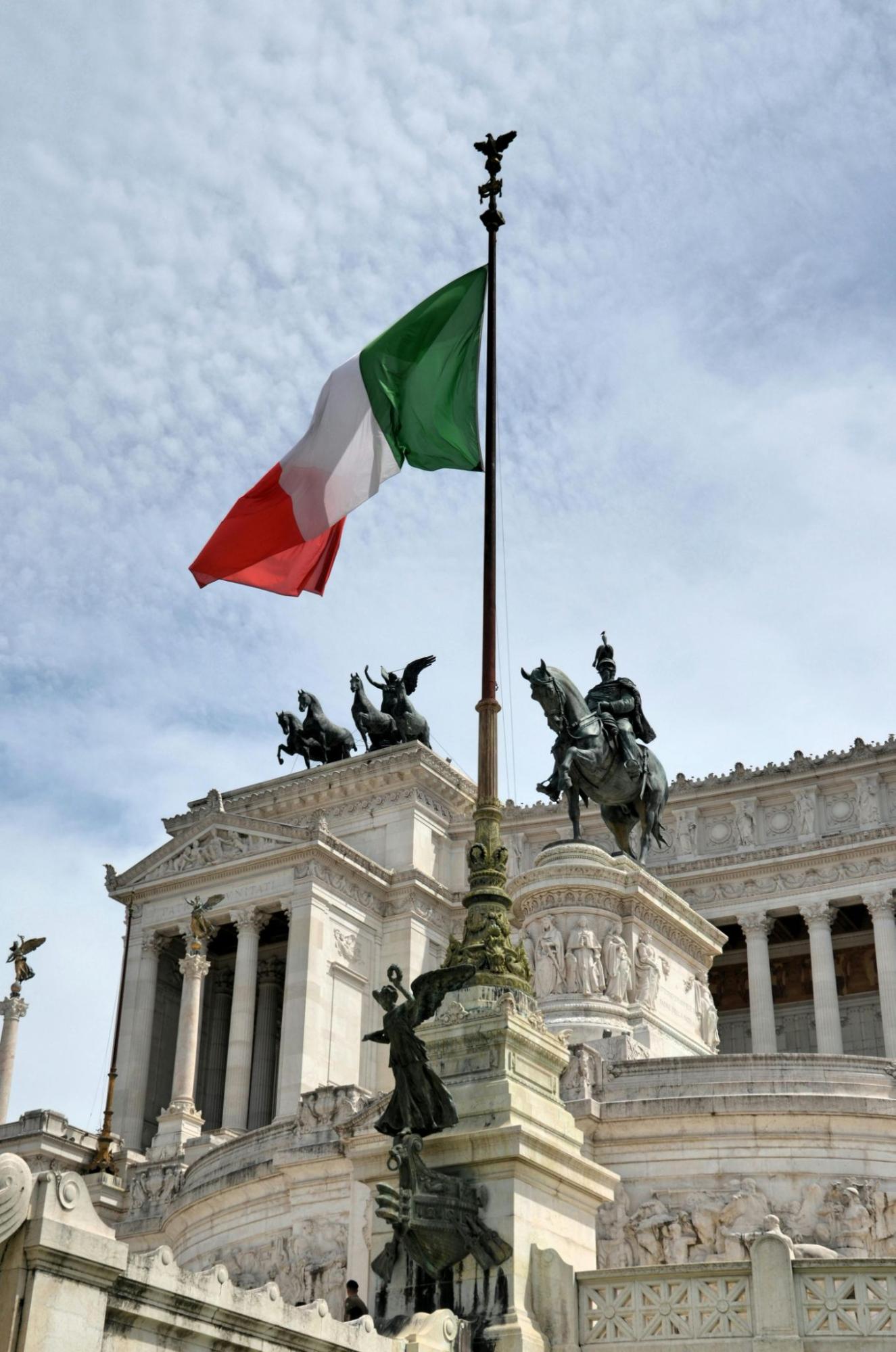
Italian Flag: Colors, Meaning & History
Did you also know that Il Tricolore, the Italian flag, has been around since 1797, and is one of the oldest flags in use in modern times? It could easily be mixed up with the nation, and it also has a past relating it to the nation.
The Italian flag is evident all over Italy, be it in Rome, a local Italian restaurant, or even in an international soccer match. In addition to its overwhelming aestheticism, its narrations provide history, identity, and tradition.
In the following blog post, we will analyze the colors of the Italian flag and see what they represent, examine the history of the Italian flag, and learn why discussing the history is important even today.
Meaning of the Italian Flag Colours
The Italian flag was originally designed under Napoleon's rule. But the flag was influenced by the "Tricolour" French flag. The green, white, and red colors in the Italian flag were not finalized in one. Colors selected after many changes that have been recurring throughout its history. Well, the vertical stripes are the same size, and the green stripe is always placed near the flagpole.
Interestingly, there is no clear answer to what the three colors of the Italian flag truly mean. Throughout the years, various concepts have been developed. Some claim that green is the color of freedom, white is the faith, and red is the color of love. Many people believe that the colors have religious significance: hope is green, faith is white, and charity is red. The widespread one is that they represent Italy itself:
-
Green represents the countryside
-
White represents the snowy Alps
-
Red represents the bloodshed over the people gaining independence.

The Origin and Evolution of the Italian Flag
The flag of Italy was not created overnight. It has a rich history due to the country's struggle to be free and unified. The history started in the late 18th century and progressed in Italy.
Here is the historical breakdown of the changes to the flag over time:
In Northern Italy, the tricolour was first used by the Cispadane Republic. At that time, the Italian Flag colors were chosen green, white, and red. The French Revolution inspired it and soon became a symbol of new ideas and independence.
When Italy became one under the monarchy, the coat of arms of the House of Savoy was placed in the middle of the flag. This shows the strength of the ruling dynasty.
-
1946 - Birth of the Republic
In the post-World War II referendum, Italians were asked to adopt a republic. The Savoy device was discarded and went back to only the green, white, and red stripes that we are still familiar with.
The Italian people's solidarity, pride, and spirit are symbolized by the tricolor. It serves as a remembrance of Italy's past rather than a flag.
Historical and Modern Significance of the Italian Flag
The Italian flag has always been more than just tri-colored stripes. In fact, it represents the nation’s struggles, victories, and identity.

Historical Importance
The tricolor used to represent the fight for liberty and unification. During the 19th century, the flag served as a symbol of liberty movements as Italy was composed of smaller states. It brought to mind the common culture of the people and their dream to create one country. This act of waving the flag gave hope to soldiers, revolutionaries, and common people in Italy that there would be a free Italy.
Modern Significance
Even now, the flag retains the same significance it had in the past. On national holidays, during athletic events, or on government buildings, you have witnessed the flag being proudly flown. It's something Italians take pride in displaying. At an official ceremony, celebration, or international soccer game, you could have seen the flag.
Today, Il Tricolore stands as a bridge between Italy’s past and present.
When is the Italian Flag Used?
The Italian, also known as Tricolore, is used in official state ceremonies. The Italian military uses this on national holidays like Tricolor Day (January 7th).
Beyond these moments, the flag appears in many other settings that reflect both pride and tradition:
-
The flag is widely displayed on days like Republic Day (June 2) and Liberation Day (April 25).
-
Waved passionately during football matches, the Olympics, and other international competitions.
-
Flies are permanently on parliament, ministries, and embassies as a mark of national identity.
-
Displayed every day, so citizens do not forget about unity and heritage.
-
Used in military parades, state ceremonies, the anniversary of the state, and the commemoration of the history of Italy.
Conclusion
In conclusion, the Italian flag colors are not plain stripes of green, white, and red. In conclusion, the Italian flag colors are not plain stripes of green, white, and red. The Italian coloured arrangement, the tricolore, is a banner that has bound the nation since the start of the revolution in 1797, all through to the present day.
If the story of the Italian flag inspired you, you might want to get a new flag for your home. If yes, then FlagsExpo is your go-to source that offers quality-made flags or flag gear.
FAQs
-
What do the Italian flag colors mean?
The meanings were not given initially. Gradually, green became synonymous with hope, white with faith, and red with love in the Napoleonic period. Other sources indicate that it symbolizes the Italian land green for the hills, white for the Alps, and red due to bloodshed during the struggle to gain independence.
Real Result: A more religious interpretation is that green represents hope, white represents faith, and red represents charity.
Takeaway: The meanings evolved over time, shaped by cultural narratives rather than the original intent.
-
Why are the flags of Italy and Mexico so similar?
Although the green, white, and red stripes on both flags are the same, Mexico's flag has an eagle emblem and a different legend. Their similarity is not a result of direct copying, but rather of a shared revolutionary spirit.
Real Result: According to Wikipedia, the Italian national colors were first used in Genoa in 1789 and on military banners in 1796. The flag of Mexico took a different route.
Takeaway: Although they appear to be similar, this is really a coincidence based on shared revolutionary beliefs rather than a relationship.
-
What's the difference between the Irish flag & the Italian flag?
Italy’s flag is green, white, and red. Ireland’s is green, white, and orange. They have the same layout but different colors and meanings.
Real Result: General vexillology sources note that, although they appear similar, the colors differ and have distinct histories.
Takeaway: Looks can trick you into thinking those color differences matter, and they hold unique national stories.
-
What did the old Italian flag look like?
During the Kingdom of Italy (post-1861), the tricolour included the Savoy family’s coat of arms in the center.
Real Result: After the birth of the Republic, a decree of 19 June 1946 established the new flag without the Savoy coat of arms.
Takeaway: The Republic flag removed royal symbols for a national identity.
-
Which flag is older, Mexico's or Italy's?
Italy’s tricolour was officially adopted in 1797, while Mexico’s current flag emerged later.
Real Result: Wikipedia confirms January 7, 1797, as the tricolour’s adoption date by the Cispadane Republic.
Takeaway: Italy’s national flag predates Mexico’s by decades
-
How old is Italy as a country?
Modern Italy was formed in 1861 during unification under the Kingdom of Italy.
Real Result: The formation of the modern Italian state began in 1861 with the unification of most of the peninsula under the House of Savoy.
Takeaway: Italy has been a unified country since 1861.
-
Does pizza represent the Italian flag?
Fun myth! The Margherita pizza was created in 1889 with red tomato, green basil, and white mozzarella, long after the flag existed.
Real Result: The end product was a pizza with green basil, white mozzarella, and red tomatoes. This was like Italy’s flag with a precision that would make modern PR consultants envious.
Takeaway: The pizza’s colors echo the flag, but that was likely symbolic flair, not an origin.
-
When was the Italian flag officially adopted?
On January 7, 1797, the Cispadane Republic adopted the tricolor.
Real Result: According to Wikipedia, this was the first time an independent Italian state formally adopted it.
Takeaway: That date is the tricolour’s true beginning and is now celebrated as Tricolour Day.
-
Is the Italian flag used differently on national holidays?
Yes, official ceremonies prominently feature the flag, especially on Tricolour Day, January 7.
Real Result: According to Wikipedia, Tricolour Day was established in 1996 and is officially celebrated each year.
Takeaway: The flag plays both a ceremonial role and a daily symbol of unity.
-
What is the nickname of the Italian flag?
It’s commonly called “ Il Tricolore ”, meaning “The Tricolour.”
Real Result: Wikipedia uses this name in both Italian and English.
Takeaway: The nickname is simple, widely used, and reflects pride in the flag itself.